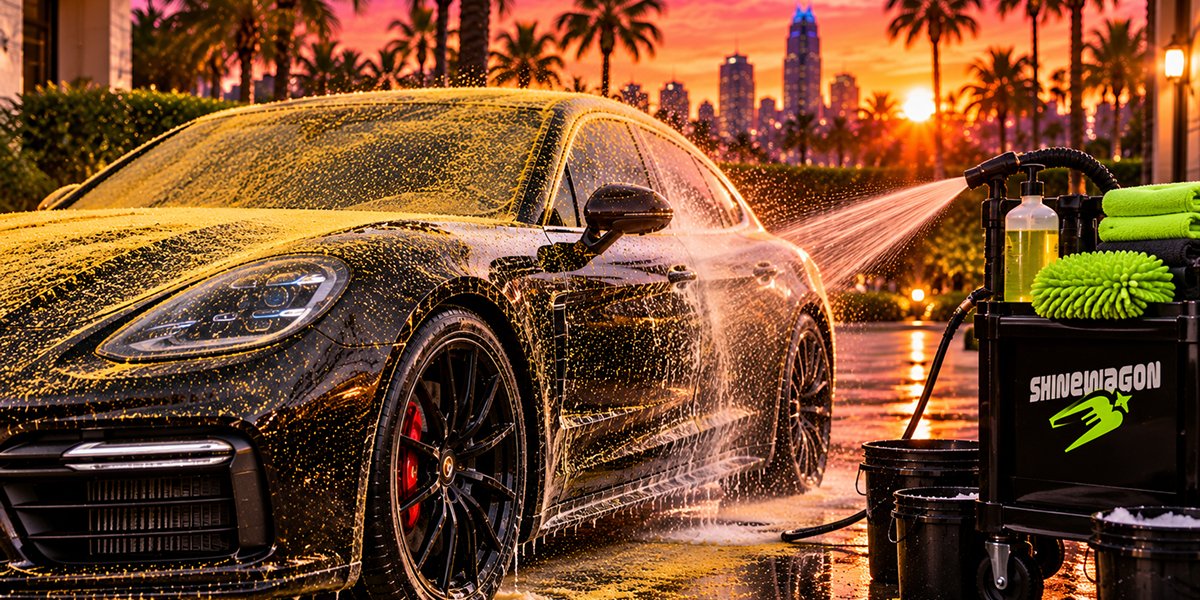
The safest way to remove pollen from a car is to rinse it off with plenty of water first, then wash with a pH-neutral car shampoo and a clean mitt. Never wipe pollen off dry — with a towel, your hand or a duster. The yellow layer contains grit and dust along with pollen grains, and dry wiping drags it across the clear coat, leaving fine scratches and swirl marks.
Why Pollen Season Is So Bad in Charlotte
Charlotte is surrounded by pine trees, and pines release enormous amounts of pollen, typically peaking in March and April. Oaks and other trees follow, so the season can stretch for weeks. On peak days, cars parked outdoors turn yellow-green within hours.
The pollen itself is light and powdery, but it doesn’t arrive alone. It settles together with road dust and sticks to anything left on the paint — dew, sap, bird droppings.
Can Pollen Damage Car Paint?
Pollen won’t eat through your paint overnight, but it can cause problems in three ways:
- Scratching. The main risk. Dry wiping turns the pollen-and-dust layer into a mild abrasive.
- Staining. When pollen gets wet from dew or a light rain and then bakes in the sun, it can leave stubborn marks, especially on light-colored or unprotected paint.
- Trapping other contaminants. A pollen layer holds moisture, sap and droppings on the paint longer.
The Safe Removal Method
- Pick the right time. Wash in the shade or early morning. Hot paint dries soap and leaves spots.
- Rinse thoroughly. Start from the roof and work down. Let water carry away as much pollen as possible before anything touches the paint.
- Use a pre-wash foam (if available). It softens and lifts remaining residue, reducing contact.
- Two-bucket wash. One bucket with pH-neutral shampoo, one with clean water to rinse the mitt. Our guide to car detailing chemicals explained explains why a neutral shampoo is the right base product.
- Wash top to bottom, rinsing the mitt often.
- Rinse again, including door jambs, the cowl under the windshield, and window seals.
- Dry with a clean microfiber towel or a blower.
Don’t reach for dish soap to “cut through” pollen. It strips the wax that makes pollen easier to remove next time — see Is Dish Soap Safe for Washing Your Car?
Don’t Forget These Spots
| Area | Why it matters |
|---|---|
| Cowl (base of windshield) | Pollen and pine needles collect here and can clog drains |
| Cabin air filter | Pollen gets pulled into the cabin; a clogged filter reduces airflow |
| Door jambs and seals | Pollen collects in the gaps |
| Interior vents and dashboard | Fine yellow dust settles inside, too |
| Convertible tops | Fabric tops trap pollen in the weave |
How to Keep Pollen From Sticking
- Apply protection before the season. Wax, a sealant or a ceramic-based spray makes the surface slick so pollen rinses off with water alone. Late winter is a good time — after the brine season is over (see how winter road brine damages your car).
- Use a rinseless wash between full washes if you can’t use a hose.
- Park in a garage or under cover when possible.
- Keep a quick detailer in the trunk for bird droppings and sap — not for dry pollen.
- Avoid car covers on a dusty car. A cover rubbing on a pollen-coated surface in the wind works like sandpaper.
When to Call a Professional
In peak pollen weeks, a car can need weekly washes to stay clean. If you don’t have the time, space or a hose — which is common for apartment and condo residents — a mobile exterior detail in Charlotte can wash and protect the car where it’s parked. Booking a protective treatment right before pollen season makes every wash afterward faster and safer.
FAQ
Pine pollen usually peaks in March and April, with tree pollen continuing into May. Exact timing shifts each year with the weather.
For visibility, yes. But dry wipers on a pollen-coated windshield can leave fine scratches, so use plenty of washer fluid and wash the glass soon after.
No. Daily washing adds wear. A protected car rinsed once or twice a week, with a full wash as needed, is a better balance.
SHINEWAGON Mobile Detailing Location
Book Mobile
Detailing Today