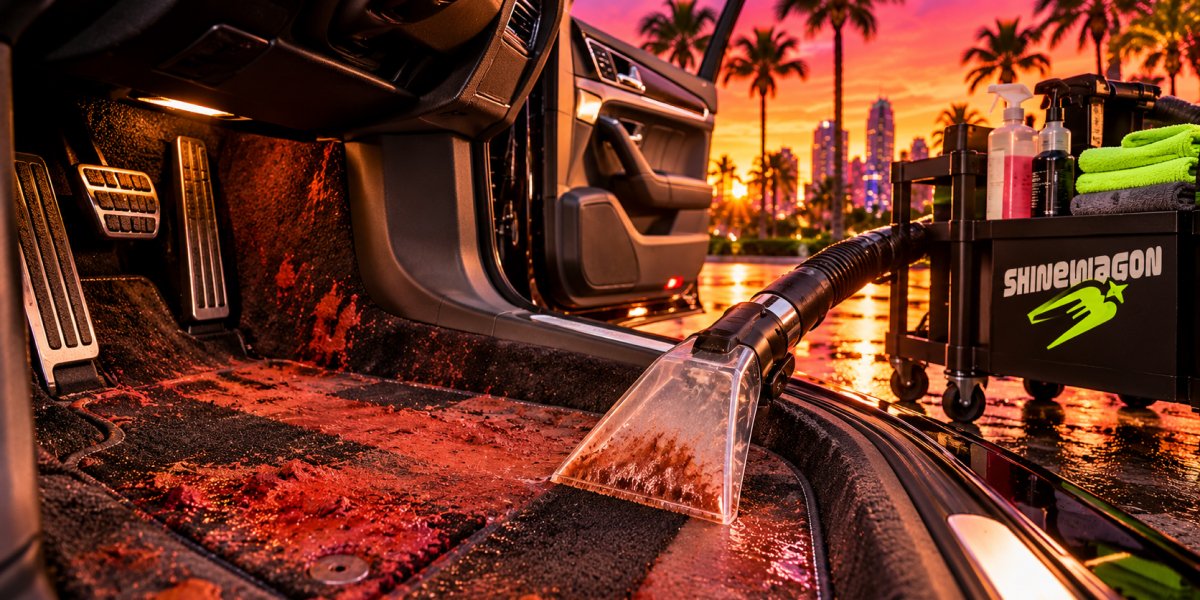
North Carolina red clay stains are hard to remove because they’re not ordinary dirt — the red color comes from iron oxides, essentially a natural rust pigment that binds to fibers. To remove them, let the clay dry completely, vacuum out as much as possible, then treat the remaining stain with a cleaner made for iron-based or rust stains, followed by hot-water extraction. Scrubbing wet clay with soap and water usually spreads it deeper into the carpet.
Why Piedmont Red Clay Stains So Badly
Much of the Charlotte region sits in the Piedmont, where soils are rich in clay and iron. North Carolina’s official state soil, the Cecil series, is a classic example: deep, red, clay-heavy. Over thousands of years, iron minerals in the soil oxidized — the same chemistry as rust — and coated the clay particles with red iron oxide.
That creates two problems in a car:
- Clay particles are extremely fine. When wet, they work deep into carpet fibers and fabric weave.
- Iron oxide is a pigment. Regular detergents lift dirt but don’t dissolve iron compounds, so a faint orange stain stays even after the mud is gone.
That’s why the stain often “comes back” orange after drying: the dirt was removed, but the iron stayed.
Step 1: Let It Dry
This is the counterintuitive part. Wet clay acts like paint. Rubbing it spreads pigment across a larger area and pushes it deeper. Let mud dry completely — overnight if possible.
Step 2: Break It Up and Vacuum
- Use a stiff brush to break dried clay into powder.
- Vacuum slowly, in several directions, to lift particles out of the pile.
- Repeat brushing and vacuuming until almost nothing comes up.
Most of the work happens here. The less clay left in the fibers, the less pigment you’ll have to dissolve.
Step 3: Treat the Remaining Stain
| Approach | When to use it | Notes |
|---|---|---|
| Carpet/upholstery shampoo + extraction | Light, fresh stains | Removes loose soil; may leave an orange shadow |
| Iron/rust stain remover for fabric | Persistent orange stains | Typically mildly acidic; dissolves iron compounds. Test on a hidden spot first |
| Repeat extraction | After any chemical treatment | Rinses out both the dissolved iron and the cleaner |
How to apply:
- Test first on a hidden area — under a seat or in the trunk — to check for color loss.
- Apply the cleaner to the stain only, working from the outside edge inward so it doesn’t spread.
- Agitate gently with a soft brush, then let it dwell per the label.
- Extract with clean water — a wet vacuum or extractor — to remove residue. Leftover cleaner attracts new dirt.
- Dry fully. A damp carpet in humid weather can start to smell musty; see fixing a musty smell in your car.
For a broader look at how stain chemistry works — why an iron stain needs a different product than a coffee spill — see car detailing chemicals explained.
Red Clay on Other Surfaces
Seats
Fabric seats follow the same process, with extra care to avoid oversoaking the foam. On leather, wipe off clay quickly with a damp microfiber and a leather-safe cleaner; dried clay can be mildly abrasive on leather.
Floor Mats
Rubber mats can be hosed off and scrubbed. Carpeted mats can go through the full process outside the car.
Exterior: Paint, Wheel Wells and Rocker Panels
Red clay splashes up onto lower panels and into wheel wells after rain or off-road trips. Rinse it off before washing so the grit isn’t dragged across the paint. Persistent orange tinting on lower paint or wheels may need a dedicated iron remover.
Mistakes to Avoid
- Scrubbing wet clay into the carpet.
- Using bleach — it can discolor carpet and does not dissolve iron oxide effectively.
- Using hot water on wet mud before vacuuming — it makes clay even more fluid.
- Leaving cleaner in the carpet without extraction.
Preventing Red Clay Stains
- Use deep-grooved all-weather mats in fall, winter and spring.
- Keep a stiff brush in the trunk for shoes and dog paws.
- Rinse lower panels after muddy trips before the clay dries and hardens.
Pets are a frequent red clay carrier. If your dog comes back from a hike covered in mud, our guide to removing pet hair from car seats and carpet helps with the rest of the cleanup.
When to Call a Professional
Old red clay stains — especially ones that were scrubbed while wet — often need several rounds of treatment and extraction. If you’re dealing with stains across the whole floor, or preparing the car for a sale or lease return, a mobile interior detail in Charlotte can handle the full cleanup on site.
FAQ
Usually yes, if you remove the dry clay first and then use a cleaner that targets iron-based stains. Very old stains may lighten but not disappear completely.
Regular cleaners remove the clay particles but leave iron oxide pigment behind. That pigment needs an iron or rust stain remover.
Vinegar is a mild acid and may lighten a fresh stain, but dedicated fabric rust removers are more effective. Always test for colorfastness and extract thoroughly afterward.
SHINEWAGON Mobile Detailing Location
Book Mobile
Detailing Today