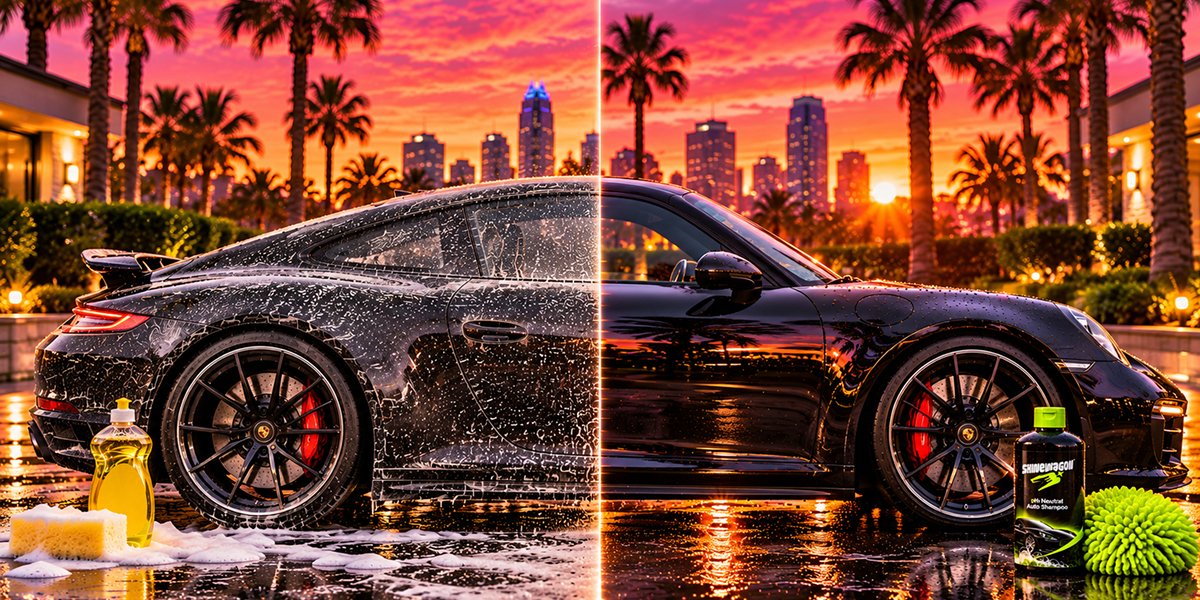
Dish soap won’t damage your car’s paint in a single wash, but it is the wrong tool for regular car washing. It is designed to strip grease, and the protective layer on your paint — wax, sealant or the top of a ceramic coating — behaves a lot like grease. Wash with dish soap repeatedly and you remove that protection, leaving the clear coat exposed to UV, pollen, sap and bird droppings.
Why Dish Soap Works So Well on Dishes
Dishwashing liquid is built around strong surfactants: molecules with one end that bonds to water and another that bonds to oil. They surround fat and food residue and lift it off plates. Manufacturers tune them to cut grease quickly, even in cold water.
That’s exactly the issue on a car. Car waxes and many sealants are oily or polymer-based layers. To dish soap, they look like a greasy plate. For a deeper look at how cleaning chemistry works, see our guide to car detailing chemicals explained.
What Happens to Your Car After a Dish Soap Wash
Wax and Sealant Get Stripped
One wash can noticeably weaken wax; a few washes can remove it. You’ll notice water stops beading and starts “sheeting” or clinging to the paint. That’s the sign protection is gone.
The Clear Coat Is Left Unprotected
Clear coat is tough, but it’s not invincible. Without a sacrificial layer on top, UV and environmental fallout hit the clear coat directly. In Charlotte, that means spring pollen, summer tree sap and bird droppings — all of which can stain or etch paint faster when nothing is shielding it.
Less Lubrication, More Swirl Marks
Car shampoos contain lubricants that help a wash mitt glide. Dish soap has far less slickness for this job, so dirt particles are more likely to be dragged across the paint. The result is fine scratches and swirl marks that show up in direct sun.
Rubber and Trim Can Dry Out
Repeated degreasing pulls conditioning oils from rubber seals and unpainted plastic trim, which can speed up fading over time.
Dish Soap vs. Car Shampoo
| Dish soap | pH-neutral car shampoo | |
|---|---|---|
| Designed for | Removing grease from dishes | Removing dirt without harming protection |
| Effect on wax/sealant | Strips it | Leaves it intact |
| Lubrication for wash mitt | Low | High |
| Safe for regular use | No | Yes |
| Cost per wash | Very low | Low |
Is There Ever a Good Reason to Use It?
Yes — in one situation. Before a car is polished and protected, detailers sometimes want a completely bare surface so a new wax, sealant or coating can bond properly. A degreasing “strip wash” does that job. Today, most professionals use dedicated strip-wash products or panel-prep sprays instead because they are more predictable, but the idea is the same: you strip on purpose, then you protect immediately.
If you’re not planning to apply new protection right after, there’s no reason to strip it.
The Right Way to Wash at Home
- Rinse first. Remove loose dirt before anything touches the paint. During pollen season this step matters even more — see how to remove pine pollen without scratching your paint.
- Use two buckets. One with shampoo, one with clean water to rinse the mitt. Grit guards at the bottom trap dirt.
- Wash top to bottom. Lower panels carry the heaviest grime; wash them last.
- Work in the shade. Soap drying on hot paint leaves spots.
- Dry with a clean microfiber towel or a blower. Air-drying leaves mineral spots.
Other household products to keep off your car: glass cleaner with ammonia (on tinted windows and screens), laundry detergent, kitchen degreasers and abrasive scrub pads.
Already Washed With Dish Soap?
Don’t panic. Your paint isn’t damaged — it’s just unprotected. Wash once more with a proper car shampoo, then apply a spray sealant or wax. If the car will face winter road treatments soon, protection matters even more: chloride residue sticks to bare surfaces more easily, as we explain in how winter road brine damages your car.
When to Call a Professional
If water no longer beads, the paint feels rough, or you can see swirl marks in sunlight, a full wash, decontamination and fresh protection will reset it. A mobile exterior detail in Charlotte handles this at your home or office, with no water or power needed from you.
FAQ
No. A single wash won’t harm the clear coat. It will weaken or remove wax and sealant, so reapply protection afterward.
A cured ceramic coating is far more chemically resistant than wax, so dish soap won’t remove it in one wash. But it can clog or dull the coating’s surface and reduce water beading, and coating manufacturers recommend pH-neutral shampoo.
A rinseless or waterless car wash product is a better emergency option than dish soap. If you have neither, a simple rinse is safer than a dish soap wash on a protected car.
SHINEWAGON Mobile Detailing Location
Book Mobile
Detailing Today